Wasps & Hornets Guide
Wasp Nest Danger and Safe Removal Options in Wisconsin
A wasp nest the size of a golf ball can still contain 200 or more wasps ready to defend it with repeated stings. Understanding which species you have, where the nest is, and when to call a professional can prevent a painful — or dangerous — mistake.
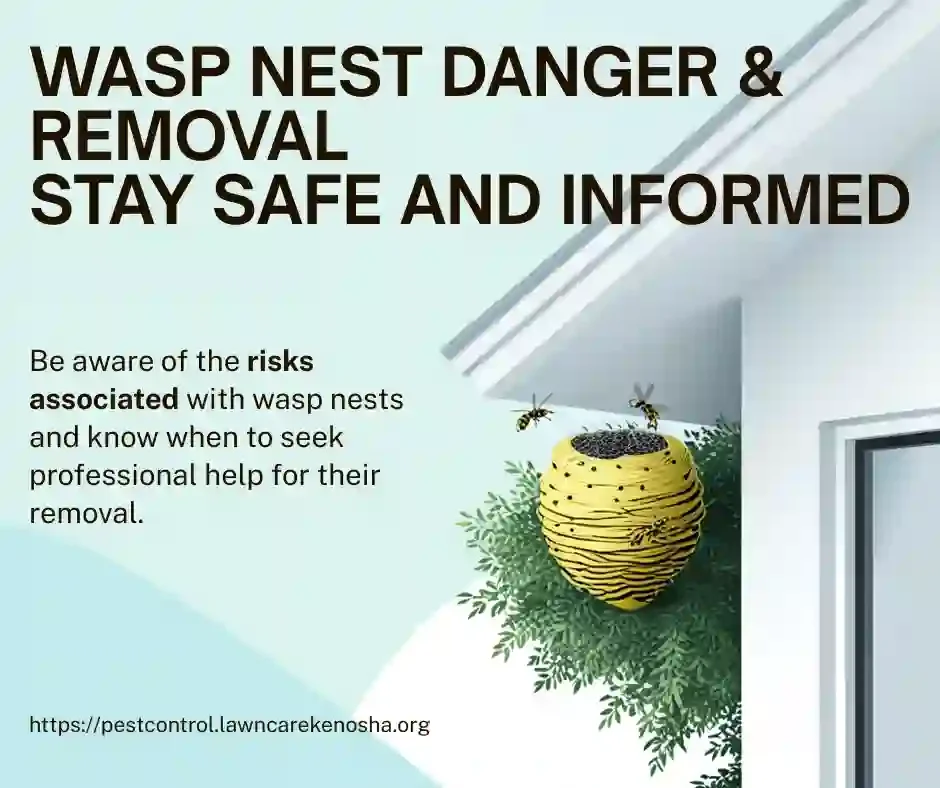
Wisconsin's three main stinging species — and why it matters
Paper wasps (Polistes spp.)
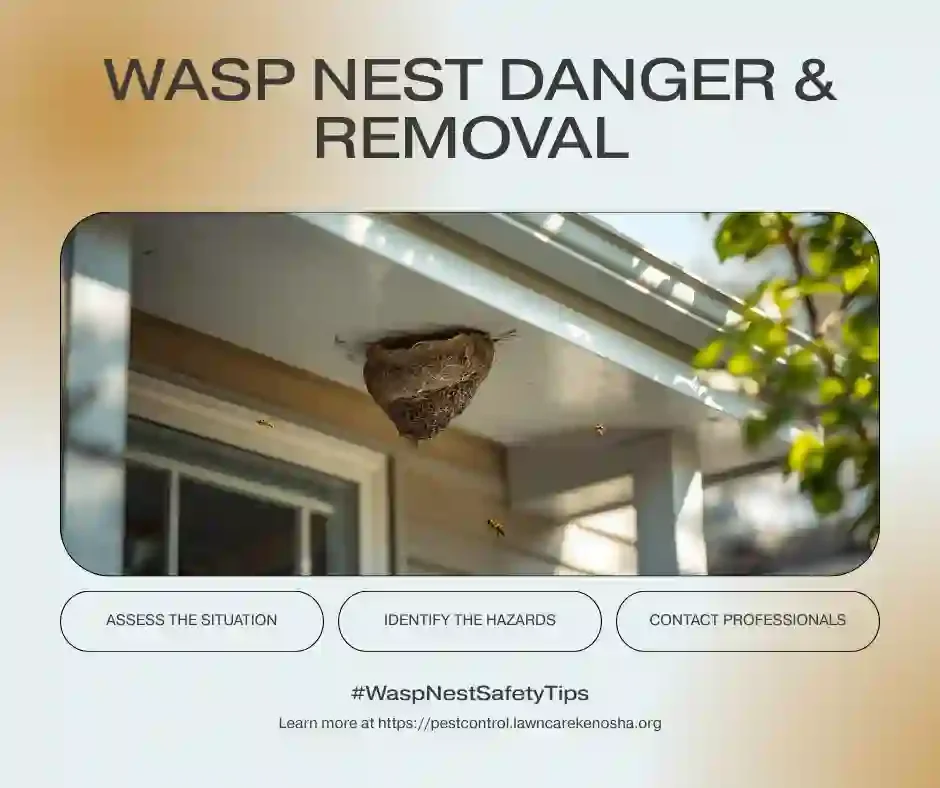
The most common and least aggressive Wisconsin wasp. Paper wasps build open, umbrella-shaped combs — the individual hexagonal cells are visible from below with no outer paper shell. Nests are typically golf-ball to softball sized and found under eaves, porch railings, window frames, and deck boards. Paper wasps will sting if the nest is directly threatened but are not aggressive at distance. A single queen starts each nest in spring; colonies reach 20–75 workers by late summer.
Bald-faced hornets (Dolichovespula maculata)
Technically a yellow jacket species despite the common name. Bald-faced hornets build the large, gray, enclosed football-shaped paper nests most people picture when they think of a "hornet nest." Colonies reach 400–700 workers by late summer and are significantly more aggressive than paper wasps — workers will pursue and sting at distances up to 10 feet from a disturbed nest. Nests appear in shrubs, trees, under eaves, and occasionally in wall voids.
Yellow jackets (Vespula spp.)
The most dangerous stinging insect for Wisconsin homeowners to encounter. Yellow jackets frequently nest in the ground — in abandoned rodent burrows, loose soil near foundations, and under concrete slabs. They also nest in wall voids, attics, and crawl spaces. Ground nests are nearly invisible until you accidentally step on or disturb them. A ground-nesting yellow jacket colony can contain 1,500–15,000 workers by August. Late-season colonies (August–October) are at peak population and maximum aggression as the colony prepares for winter. Yellow jacket stings account for the majority of severe allergic reactions to stinging insects in Wisconsin.
Nest locations that require professional removal
- Any nest inside a wall void, attic, crawl space, or soffit cavity
- Ground nests within 10 feet of a doorway, driveway, or play area
- Nests larger than a softball (bald-faced hornets or late-season yellow jackets)
- Any nest where stings have already occurred or the colony has been disturbed
- Nests near anyone with a known venom allergy
- Nests in commercial properties, rental units, or areas with regular foot traffic
When DIY removal is reasonable — and how to do it safely
A small paper wasp nest (fewer than 20 wasps, open-comb structure) located away from human activity can be treated carefully by a homeowner. The rules are strict:
- Always treat at night — wasps are inactive and all workers are in the nest after dark. Wear long sleeves, gloves, eye protection, and a head covering
- Use a wasp freeze aerosol (pyrethrin-based, labeled for wasps and hornets) with a jet spray of at least 15–20 feet. Stand upwind
- Apply and leave — do not stand near the nest after spraying. Return the following morning to confirm no activity before knocking the nest down
- Have an exit route planned before you begin
Never attempt DIY removal of: bald-faced hornet nests of any size, any ground-nesting yellow jacket colony, any nest inside a structure, or any nest that has already been disturbed and triggered a defensive response.
Preventing wasp nests from returning
Once a nest is removed or treated, the same location is often reused the following year — not by the same colony (wasp colonies die off each winter in Wisconsin), but because the site offered attractive nesting conditions the first time.
- Seal gaps in soffits, fascia, and siding before spring (April is when queens begin scouting)
- Inspect and seal gaps around window and door frames each spring
- Apply residual insecticide to eave areas and soffit returns in April–May before nesting begins
- Fill abandoned rodent burrows near the foundation to prevent ground nesting
- Keep outdoor trash cans tightly lidded — yellow jackets forage for protein near exposed food waste
Honeybees — important distinction
If the nest is rounded, attached to a tree branch, wall, or structure, and the insects are golden-brown with visible pollen baskets on their legs, you may have honeybees rather than wasps. We do not treat honeybees. Honeybees are protected pollinators. Contact a local Wisconsin beekeeper for live colony relocation. See our pests not covered page for details.
Wasp Nest FAQs
When are wasps most aggressive in Wisconsin?
Late summer — August through October — is peak aggression season for yellow jackets and bald-faced hornets. Colony populations are at their annual maximum, and as the season progresses and natural food sources decline, workers become more defensive and more likely to forage aggressively near human food and garbage. Paper wasps are also more defensive in late summer as they prepare for the colony to die off before winter.
How do I know if a wasp nest is still active?
Watch the nest from a safe distance for several minutes. An active nest will have wasps entering and leaving through a single opening. The nest surface may also have slight movement from workers inside. In Wisconsin, all wasp and hornet colonies die off by the first hard frost (typically October–November). Empty nests found in winter are not reused by the same colony but may be reoccupied by a new queen the following spring.
Should I seal the entry point after a nest is removed from a wall void?
Yes — but wait at least 48–72 hours after treatment before sealing. Forager wasps that were away from the nest during treatment will return and, finding the entry sealed, will die outside rather than chewing through to the interior. If you seal immediately after treatment, trapped survivors may chew through interior walls. Your pest control technician can advise on the correct timing for your specific situation.
Can I use a garden hose to knock down a wasp nest?
No. Water does not kill wasps and the disturbance triggers an immediate defensive mass-sting response. The workers will pursue the threat — you — not the water source. This is one of the most common causes of severe multiple-sting incidents. Never use water, a broom, or any physical disturbance on an active wasp or hornet nest without treatment first.