Spiders Guide
Spider Infestation Signs Around Wisconsin Homes
Most Wisconsin spiders are harmless nuisances — but a sudden spike in spider activity almost always means a larger prey insect problem is already present. Here is how to read the signs, identify the species that matter, and know when treatment is warranted.
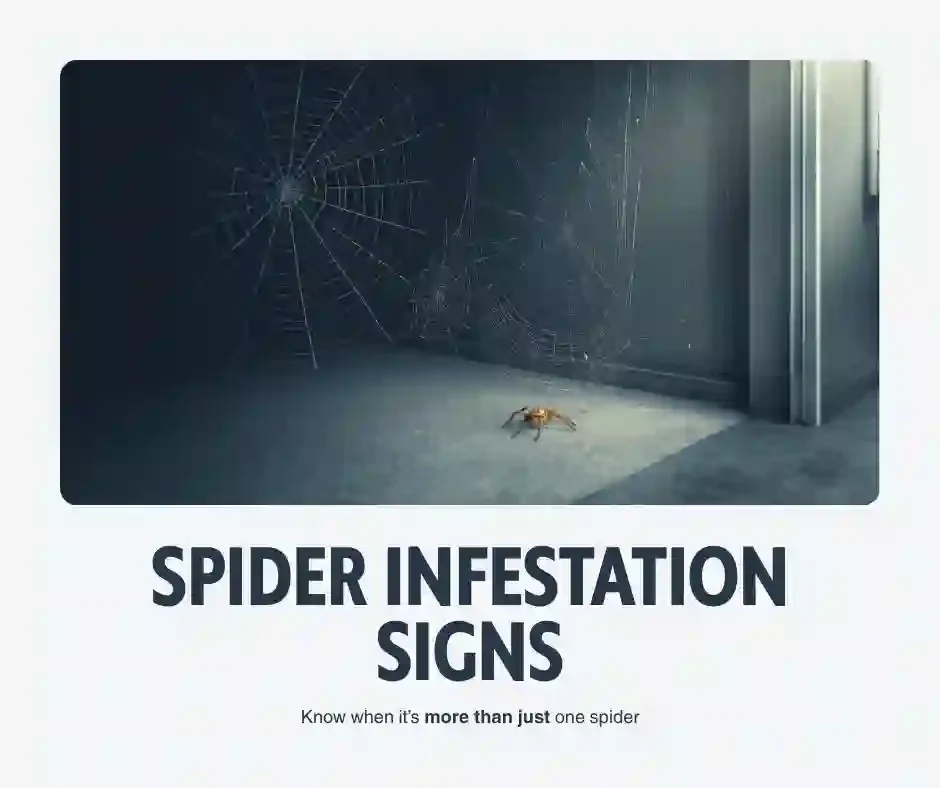
Common Wisconsin spider species — which ones matter
Wolf spiders (Lycosidae)
Large, fast-moving, ground-hunting spiders frequently mistaken for brown recluses by Wisconsin homeowners. Wolf spiders are hairy, brown to gray, and can reach 1–1.5 inches in body length. They do not spin webs — they hunt actively at ground level, especially in basements, garages, and along foundation walls. Wolf spiders are not dangerous to humans (their venom causes minor localized reaction at most) but their large size and speed make them alarming. They enter homes in fall seeking warmth and prey.
Common house spider (Parasteatoda tepidariorum)
The small brown spider responsible for most cobwebs in corners, window frames, basement joists, and utility areas. House spiders are essentially harmless and primarily a cosmetic nuisance. A high density of house spider webs in basement or garage spaces indicates significant small insect activity in those areas.
Cellar spiders (Pholcidae)
Long-legged, pale, delicate spiders found in basement corners and crawl spaces. Often called "daddy longlegs" (a misnomer — actual harvestmen are not spiders). Completely harmless, beneficial in consuming other insects, and a sign of moisture or insect activity in the cellar space.
Brown recluse (Loxosceles reclusa) — rare in Wisconsin
The brown recluse is not native to Wisconsin and does not have an established wild population in the state. Occasional specimens arrive in boxes, furniture, and shipped goods from southern states. If you find a uniformly tan-to-brown spider with a dark violin-shaped marking on the cephalothorax (head region) and only six eyes (most spiders have eight), photograph it and call a professional. Brown recluse bites can cause necrotic tissue damage and warrant medical attention.
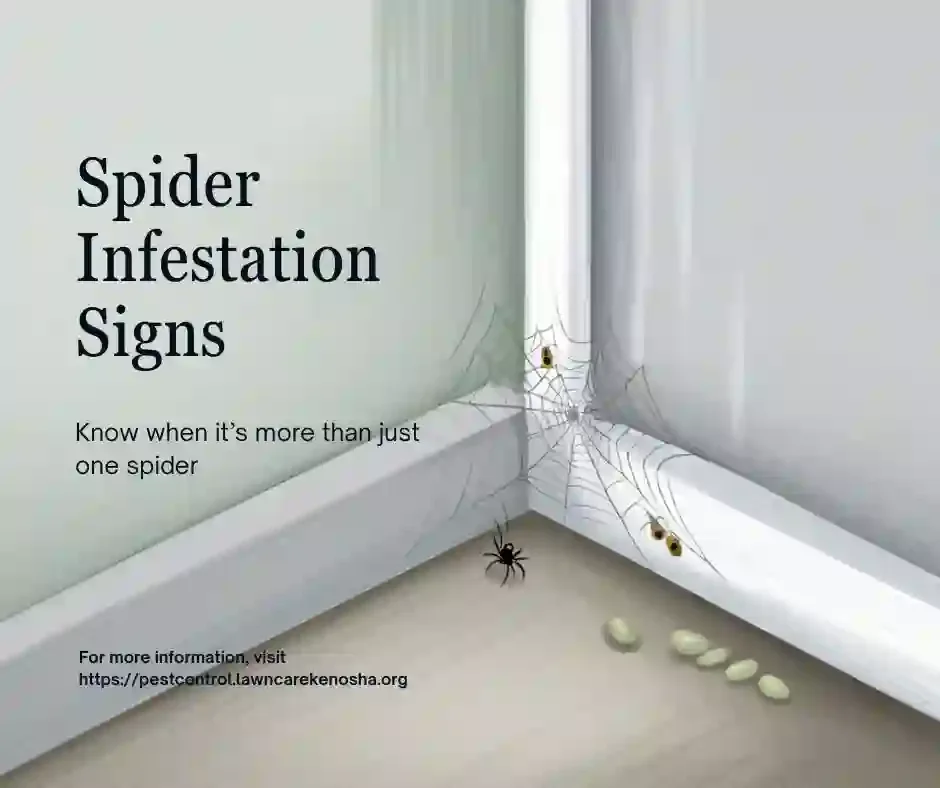
Signs of a genuine spider infestation
- Multiple active webs — webs with spiders present, not just old abandoned webs with dust. Active webs are taut and lightly sticky; abandoned webs are dusty and loose
- Egg sacs — small, papery spheres attached to webs or hidden in corners. A single egg sac can contain 100–400 eggs depending on species
- Spiders visible daily — seeing 2–3 or more different spiders per day across multiple rooms
- Ground-level activity at night — wolf spiders and other hunters are most active after dark; seeing large spiders moving across floors at night indicates a healthy population
- Concentration near light sources — spiders aggregate near exterior lights, windows, and porch lights because flying insects are attracted to light, providing a reliable food source
Why spiders increase — the prey connection
Spiders are predators and their populations closely track prey availability. A sudden increase in household spider numbers almost always precedes or coincides with an increase in the insects they consume. Common prey drivers in Wisconsin homes include:
- Millipedes, earwigs, and silverfish in damp basements — attracting ground hunters like wolf spiders
- Fungus gnats from overwatered houseplants — attracting cellar and house spiders near windows
- Cluster flies, boxelder bugs, and stink bugs entering in fall — providing abundant prey in attics and wall voids
- Moth and beetle larvae in stored food or natural fiber items in closets and attics
Identifying and treating the underlying prey population is more effective than spider-only treatment. A comprehensive perimeter treatment targeting crawling insects — the prey base — starves the spider population over several weeks.
Spider prevention for Wisconsin homes
- Seal gaps around windows, doors, pipes, and utility penetrations — especially before fall when spiders move indoors
- Reduce exterior lighting or switch to yellow or sodium vapor bulbs that attract fewer flying insects (and therefore fewer spiders)
- Remove wood piles, leaf litter, and debris piles from against foundation walls — ground-level harborage used by wolf spiders
- Reduce basement moisture with a dehumidifier — low humidity reduces the prey insects that attract cellar and house spiders
- Vacuum webs and egg sacs regularly in basement, garage, and utility areas — physical removal reduces population and breeding
- Apply residual perimeter treatment in spring and fall to foundation walls, window frames, and entry points
Spider Infestation FAQs
Are Wisconsin spiders dangerous?
The vast majority of Wisconsin's native spiders pose no meaningful health risk to humans. Wolf spiders, house spiders, cellar spiders, and orb weavers are all harmless — they may bite if directly handled and threatened, causing minor localized pain similar to a bee sting at most. The brown recluse, which can cause significant tissue damage, is not a native Wisconsin species and is rarely encountered. If you find a uniformly tan-brown spider with a violin marking and six eyes, contact a professional and seek medical advice if bitten.
Why do I suddenly have so many spiders in my house?
Two primary causes: fall migration (October–November, as outdoor temperatures drop and spiders seek warmth indoors) and an increase in prey insects. If you notice a sudden spike in spider activity in late summer or fall, it is likely the seasonal migration of wolf spiders and other ground hunters. If it occurs mid-summer, investigate for a concurrent increase in small flying or crawling insects — fungus gnats, cluster flies, or grain beetles — that are sustaining the spider population.
How do I prevent spiders from coming inside in fall?
The most effective fall spider prevention combines perimeter sealing (caulking gaps around windows, doors, pipes, and utility entries) with a residual perimeter insecticide treatment applied to foundation walls and exterior entry points in September. This one-two approach blocks entry physically and kills any spiders that contact treated surfaces. Inside the home, reducing clutter in basements, garages, and storage areas removes harborage and makes populations easier to monitor.
What is the difference between spider mites and house spiders?
Spider mites are microscopic arachnids (not true spiders) that live on and damage plants — they are not the spiders entering your home. Spider mite infestations appear as fine webbing on plant leaves accompanied by yellowing, stippling, or bronzing of leaf tissue. House spiders are visible to the naked eye and live in structural areas (corners, basements, window frames), not on plant foliage. Spider mite treatment requires horticultural products applied to affected plants — it is outside the scope of standard household pest control.