Termites Guide
Termite Damage Warning Signs in Wisconsin Homes
Termites cause more structural damage to U.S. homes each year than fires and storms combined — and most Wisconsin homeowners do not notice activity until damage is already underway. Here is exactly what to look for.
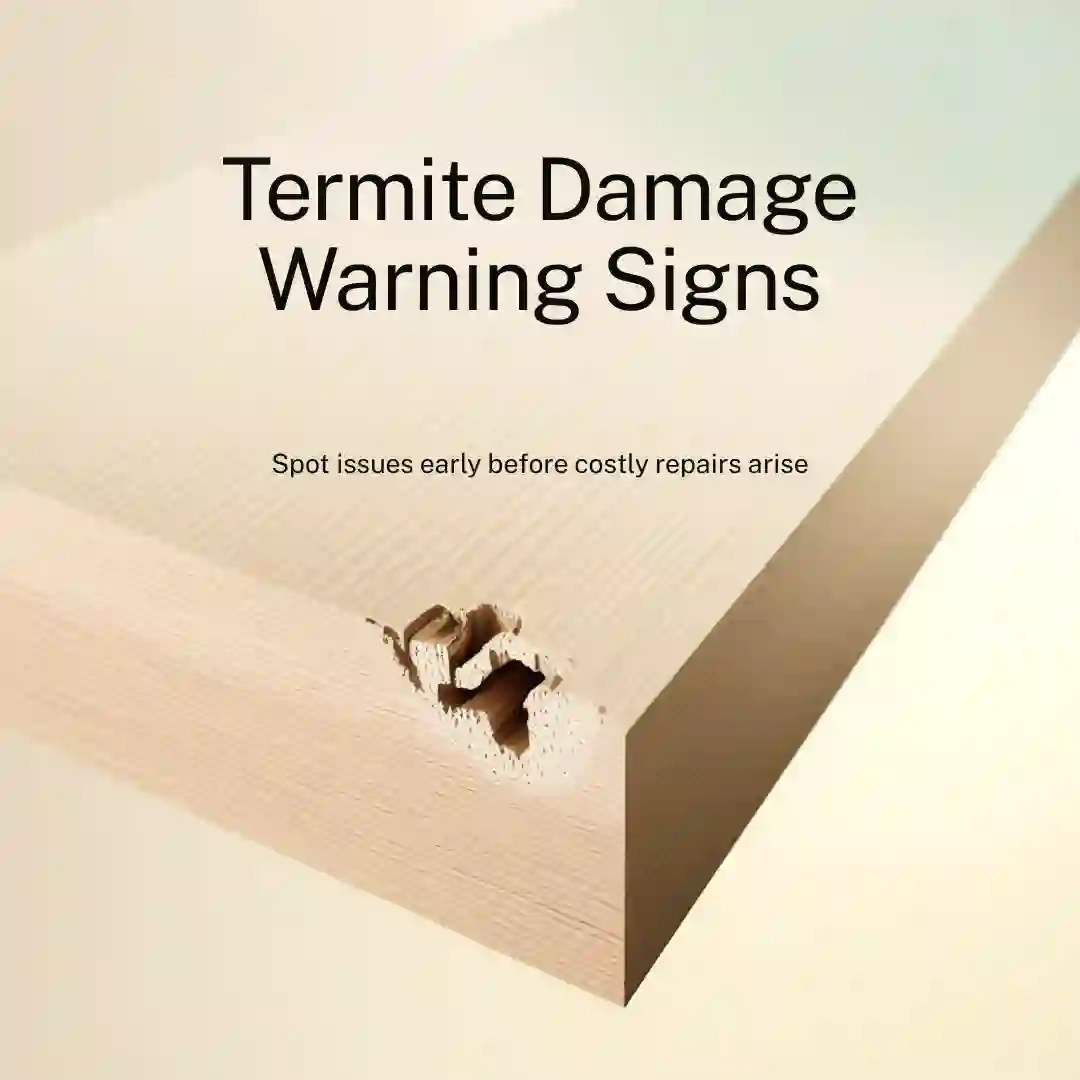
Do termites exist in Wisconsin?
Yes — and they are more active than most homeowners expect. The eastern subterranean termite (Reticulitermes flavipes) is widespread across southern and central Wisconsin, including the Milwaukee, Madison, Kenosha, Racine, Waukesha, and Green Bay metro areas. Subterranean termites live in underground colonies that can number in the millions. They reach structural wood through mud tubes built up from the soil and can consume wood from the inside out, leaving nothing but a thin shell — meaning damage is often extensive before it becomes visible.
The 5 termite warning signs Wisconsin homeowners must know
1. Mud tubes on foundation walls
Subterranean termites build pencil-width mud tubes (also called shelter tubes) from soil to wood to maintain humidity during transit. These tubes appear on exterior and interior foundation walls, crawl space piers, floor joists, and sill plates. A mud tube does not always mean active termites — colonies abandon and rebuild tubes — but any mud tube on your foundation requires professional inspection. Break a small section: if repaired within 48 hours, the colony is active.
2. Swarming and discarded wings
In Wisconsin, termite swarmers (winged reproductives) typically emerge between April and June when soil temperatures warm. Swarms last only 30–40 minutes but leave behind piles of discarded wings near windowsills, door frames, and light fixtures. Swarmers are often mistaken for flying ants — the difference is that termite swarmers have equal-length wings, a straight body with no pinched waist, and straight beaded antennae. Finding discarded wings indoors is a strong indicator the parent colony is already inside or adjacent to the structure.
3. Hollow-sounding or damaged wood
Tap along wood framing, sill plates, floor joists, and door frames with a screwdriver handle. A hollow or papery sound indicates termites have consumed the interior of the wood. Probe with a screwdriver — if it sinks into wood that should be solid, the damage is significant. Pay particular attention to wood that contacts soil or sits near moisture: sill plates, door frames at grade level, porch posts, deck ledger boards, and basement window frames.
4. Blistering, buckling, or bubbling paint on wood surfaces
Subterranean termites carry moisture through their mud tubes, which can cause paint on wood surfaces to blister or bubble even when there is no water leak. This is especially common on baseboards, door frames, and window sills. This sign is often confused with water damage — and it may be both. Moisture damage attracts termites, so the two problems frequently appear together.
5. Frass near baseboards or structural wood
Drywood termites (less common than subterranean in Wisconsin but possible in imported furniture or lumber) push frass — tiny wood-colored pellets — out of kick-out holes in infested wood. Frass looks like fine sawdust or coffee grounds piled near baseboards, door frames, or furniture. Subterranean termites incorporate their frass into mud tubes, so frass is less commonly found in the open with subterranean species.
Wisconsin moisture factors that increase termite risk
Termites require moisture to survive. Wisconsin properties with any of the following conditions face elevated termite risk:
- Wood-to-soil contact at the foundation (form boards, landscaping timbers, buried stumps)
- Crawl spaces without vapor barriers or with poor ventilation
- Gutters that deposit water near the foundation
- Plumbing leaks inside walls or under slabs
- Wood mulch or landscaping bark piled against the foundation
- Basements with chronic moisture or condensation on walls
Why DIY termite treatment rarely works
Over-the-counter termiticides and store-bought foam products treat visible wood surfaces but do not reach the underground colony. Subterranean termite colonies can number in the millions and may span multiple adjacent properties. Without a continuous liquid barrier in the soil or an in-ground monitoring and bait station system, surface treatments provide a false sense of security while the colony continues feeding elsewhere in the structure.
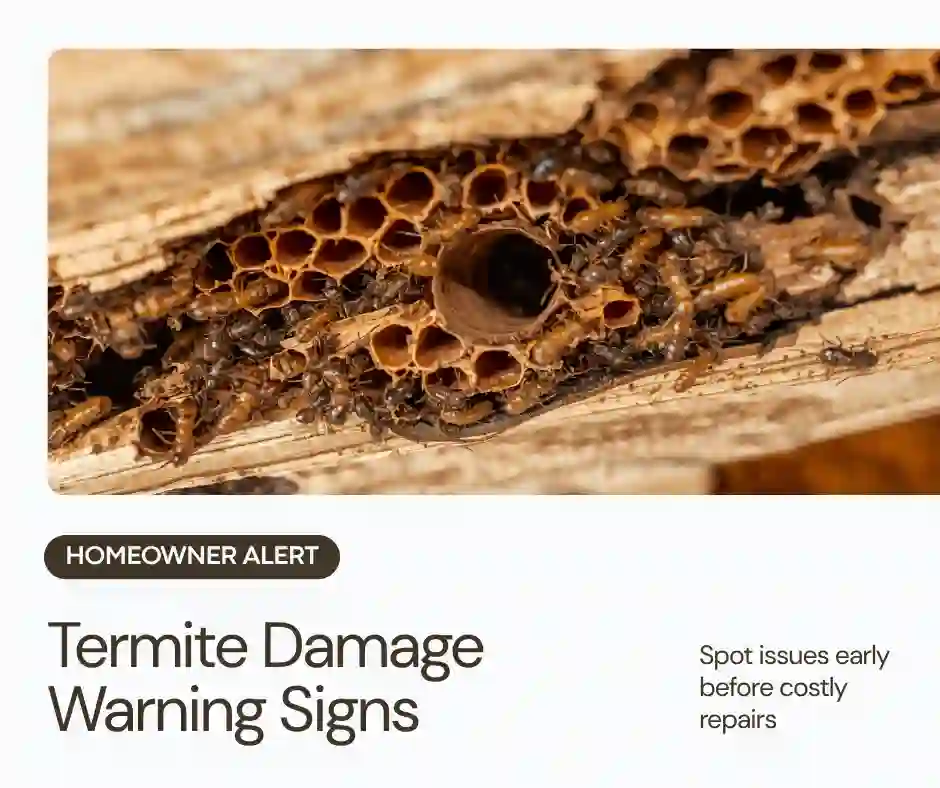
Professional termite treatment options in Wisconsin
Liquid soil barrier (termiticide): A continuous chemical barrier is applied to the soil around and under the foundation, killing termites that cross it. This is the most direct and fast-acting treatment for active infestations.
Termite bait stations: In-ground monitoring stations are installed around the perimeter. When termites are detected in a station, a bait matrix is introduced that workers carry back to the colony — eventually eliminating it. Bait systems require ongoing monitoring and are slower but effective for colonies spread across multiple structures or large properties.
Both methods require professional licensing and proper application technique. A licensed Wisconsin pest control applicator will inspect the structure, confirm species and activity level, and recommend the appropriate treatment approach.
Termite prevention steps for Wisconsin homeowners
- Keep wood mulch and landscaping materials 6 inches away from foundation walls
- Repair gutters and downspouts to direct water away from the foundation
- Fix plumbing drips and ventilate crawl spaces to reduce moisture
- Remove buried wood debris, old form boards, and tree stumps near the structure
- Maintain at least 6 inches of exposed concrete between soil and any wood framing
- Schedule a professional termite inspection every 1–2 years for properties in southern Wisconsin
Termite Warning Signs FAQs
Do termites really exist in Wisconsin?
Yes. The eastern subterranean termite is present throughout southern and central Wisconsin. It is well-established in the Milwaukee, Madison, Kenosha, Racine, and Waukesha areas. Cold winters slow but do not eliminate termite colonies — they move deeper into the soil and continue feeding on structural wood connected to heated basements and crawl spaces year-round.
What do termite mud tubes look like?
Mud tubes are roughly pencil-width (¼ to ½ inch) tunnels made of soil, termite saliva, and wood particles. They are brown or tan, appear on foundation walls, crawl space piers, floor joists, and sill plates, and feel fragile but solid. They are not the same as wasp mud dauber nests, which are lumpy and irregular. Termite mud tubes run in a relatively straight, continuous line from soil to wood.
How fast do termites damage a house?
A mature eastern subterranean termite colony of around 300,000 workers can consume approximately one foot of a 2×4 board in about 5–6 months. Colonies with millions of workers cause proportionally faster damage. The key factor is that damage is invisible until it becomes structural — termites consume wood from the inside out, leaving only a thin outer shell. Early detection through annual inspections is far less expensive than structural repair.
I found wings near a window — do I definitely have termites?
Wings near windows or doors in spring — especially in piles of equal-length wings — are a strong indicator of a termite swarm. It does not confirm that the colony is inside your structure (swarmers can enter through open windows or vents), but it does mean a mature colony is nearby. Any discovery of wings near entry points warrants a professional inspection to determine whether a colony has established inside the structure.