Published: April 2026 | Author: Preme Landscaping & Lawn Care, Kenosha WI
Here's a scenario that plays out in Kenosha yards every summer: a homeowner hires a separate lawn care company and a separate pest control company. The lawn care technician sees a brown patch and adds more fertilizer. The pest control company applies a generic spray. The problem doesn't get better. Nobody connects the dots.
The brown patch was brown patch fungal disease - made worse by the extra nitrogen fertilizer, unaffected by the insecticide.
This is what happens when lawn care and pest control operate in silos.
How Lawn Health and Pest Pressure Are Connected
Stressed lawns invite more pests. A lawn weakened by drought stress, compaction, nutrient deficiency, or poor drainage is significantly more susceptible to pest damage. Chinch bugs devastate drought-stressed turf while largely ignoring well-irrigated lawns. Brown patch disease explodes when lawns are over-fertilized with nitrogen in summer. Nutsedge thrives in waterlogged, compacted soil that struggling grass can't compete in.
Addressing root causes - drainage, fertility, mowing height, irrigation scheduling - reduces pest pressure before it requires treatment.
Pest damage mimics lawn care problems. As covered in our 7 Signs post, grub damage looks like drought, surface insect damage looks like disease, and nutsedge looks like a variety of grass to the untrained eye. A lawn care technician focused only on fertilization and mowing is unlikely to catch an early-stage grub infestation. A pest control technician unfamiliar with lawn care won't recognize that a brown patch is being worsened by incorrect fertilization timing.
Treatment interactions matter. Some lawn care practices affect pest control efficacy:
- Watering in grub control products is essential - lawn irrigation scheduling directly affects treatment results
- Fungicide applications for lawn disease can interact with herbicide treatments for weeds
- Overseeding after grub damage requires careful integration with any remaining post-treatment chemistry
When one company handles both, these interactions are managed correctly.
What Preme's Combined Approach Looks Like
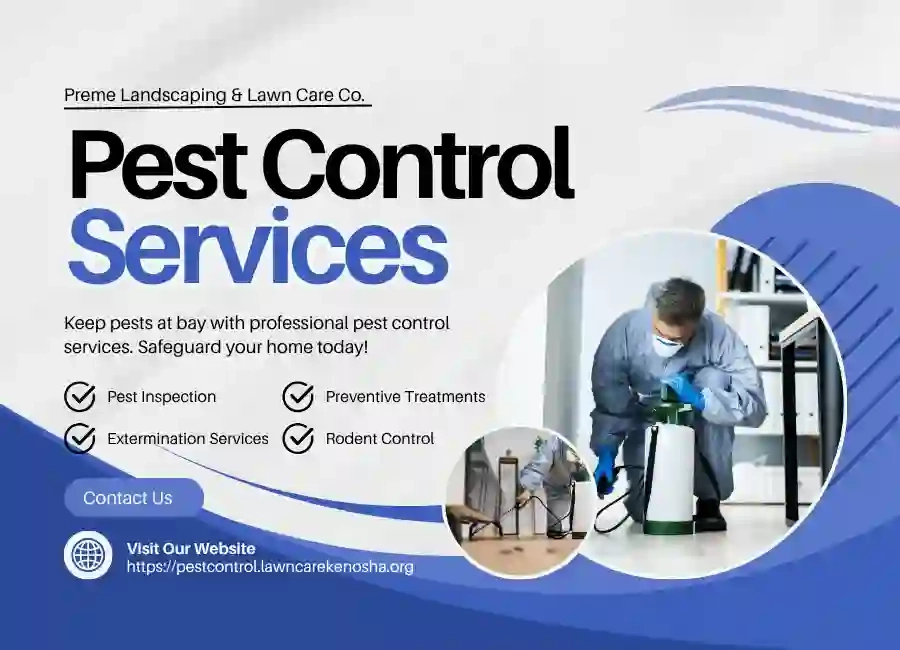
Because Preme Landscaping & Lawn Care handles both lawn care and pest control, our technicians are trained to see the full picture of your lawn's health - not just the pest or the turf condition in isolation.
When we assess a property, we're evaluating:
- Current pest activity and infestation level
- Soil and turf health indicators that affect pest susceptibility
- Lawn care practices (irrigation timing, mowing height, fertilization history) that might be contributing to pest pressure
- Treatment interactions between any lawn care and pest control programs
This integrated view means problems get identified correctly the first time, treatments are coordinated to work with each other rather than against each other, and you have one point of contact who understands your full lawn health picture.
Kenosha Lawn Care + Pest Control Services Under One Roof
Preme Landscaping & Lawn Care offers:
Pest Control: Mosquito control, grub control, flea & tick treatment, perimeter pest control, mole control, surface insect control, lawn disease management, nutsedge & weed control
Lawn Care: Weekly mowing, fertilization & weed control, aeration & overseeding, dethatching & power raking, lawn edging
Landscaping: Landscaping design, mulching, flower planting, lawn renovations, decorating stones
Additional Services: Hardscaping, irrigation, snow removal
When your lawn care and pest control are coordinated by the same team, problems get solved rather than passed back and forth between companies that don't talk to each other.
Ready to Simplify Your Lawn Care in Kenosha?
Call Preme Landscaping & Lawn Care at (773) 514-3531 to discuss a coordinated lawn care and pest control program for your Kenosha property.
📍 4710 52nd Street, Kenosha WI 53144 | ✉️ info@lawncarekenosha.org 🌐 pestcontrol.lawncarekenosha.org | lawncarekenosha.org
Last updated: April 2026