Rodents Guide
How to Get Rid of Rats Fast — and When to Call a Pro
Rats breed fast, carry disease, and cause serious structural damage. This guide covers how to confirm you have rats, what steps help immediately, and when the problem has passed the point of DIY.
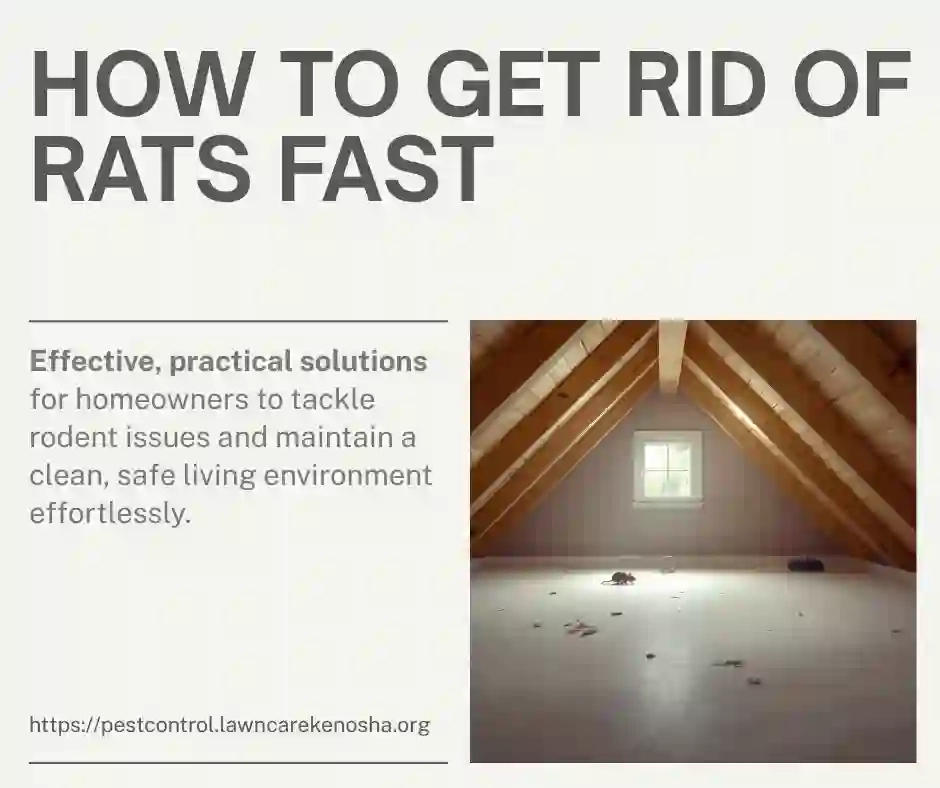
Norway rat vs. roof rat — which one do you have?
Wisconsin's two most common rat species behave very differently, and that affects where you place traps and what entry points you target.
Norway rat (brown rat)
The dominant rat species in Wisconsin. Norway rats (Rattus norvegicus) are heavy-bodied, brown or gray, and typically weigh 7–18 oz. They are ground-level nesters — burrowing under slabs, along foundation walls, beneath woodpiles, and in dense vegetation. Indoors, they concentrate in basements, crawl spaces, and lower wall voids. They are powerful chewers capable of gnawing through lead pipes, cinder block, and aluminum.

Roof rat (black rat)
Less common in Wisconsin but present in urban areas and port cities near Lake Michigan including Milwaukee and Kenosha. Roof rats (Rattus rattus) are slender, dark brown to black, and excellent climbers. They enter through rooflines, utility lines, and upper-story gaps rather than ground level. Signs of roof rats include droppings in attics, sounds of movement in the ceiling at night, and gnawed wiring in upper wall voids.
How to confirm rats vs. mice
Rat droppings are ¾ inch or longer with blunt ends — much larger than mouse droppings (¼ inch, with pointed ends). Gnaw marks from rats are large and rough-edged, often on structural framing, pipe insulation, and food packaging. Grease marks (sebum deposits from their fur) along wall edges and pipes indicate established runways. If you hear thumping or heavy movement in walls at night, that is typically rats — mice are lighter.
Immediate steps to reduce the problem
- Remove food sources — store all food in metal or thick plastic containers, eliminate bird feeders near the house, and secure compost bins
- Eliminate harborage — clear wood piles, debris piles, and dense ground cover within 3 feet of the foundation
- Set snap traps on runways — place unset traps for 2–3 days first so rats become comfortable, then set them. Place traps perpendicular to the wall with the trigger end touching the wall surface. Peanut butter or nesting material works better than cheese
- Check traps daily — dead rats left in traps attract other rodents and disease vectors
- Seal entry points — steel wool stuffed into gaps and covered with hardware cloth or caulk is a short-term fix; permanent exclusion requires patching with metal or concrete
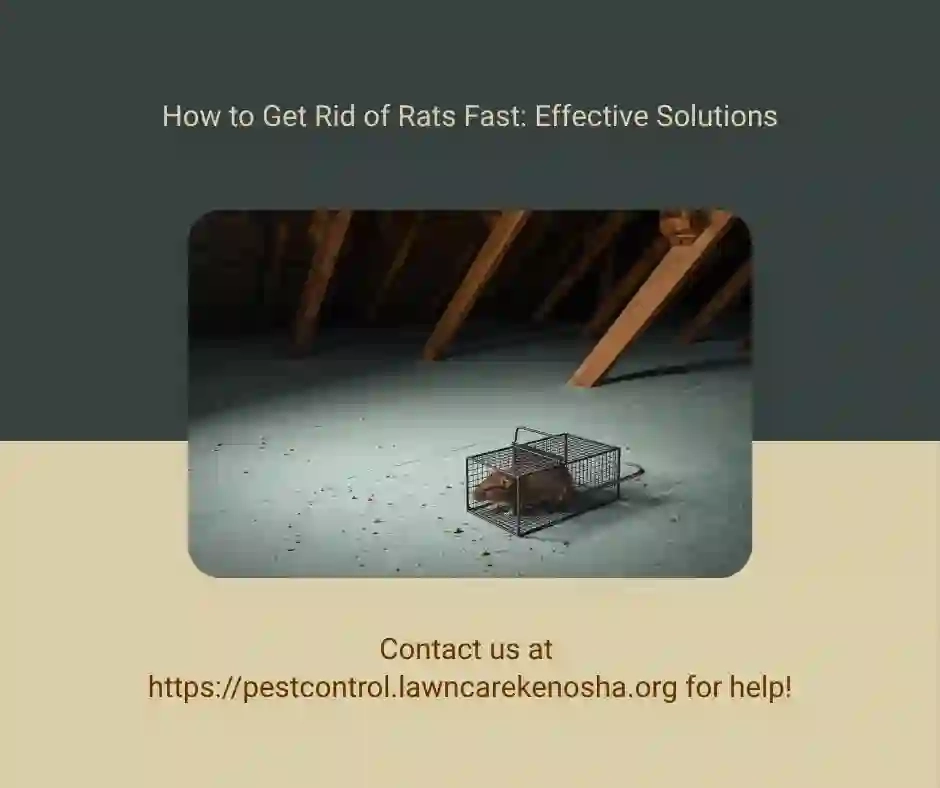
Why bait stations and rodenticide require caution
Anticoagulant rodenticide bait stations are effective but carry significant secondary poisoning risk for pets, owls, hawks, and foxes that may eat a poisoned rat. In Wisconsin, non-target species deaths from rodenticide are documented each year. If children or pets are present, snap traps inside tamper-resistant bait stations are the safer approach. Bait stations placed outdoors in high-traffic rodent areas must be secured to prevent access by non-target animals.
When to call a professional rat control service
- Activity continues for more than 10–14 days after trapping begins
- Droppings found in multiple rooms, not just one location
- Evidence of gnawing on electrical wiring (fire hazard — treat as urgent)
- Commercial property, rental building, or food-service facility with any rat activity
- You cannot locate or seal the entry points yourself
- Rats in a crawl space, wall void, or ceiling where traps cannot be safely accessed
A professional rodent control service includes identification of species, population assessment, trap and bait placement, entry-point inspection, exclusion recommendations, and follow-up visits to confirm elimination. Trapping alone without exclusion usually results in reinfestation within weeks.
Rat prevention for Wisconsin properties
- Inspect and seal the foundation perimeter every fall — gaps expand over winter as frost heaves concrete
- Cap chimney flues and repair damaged soffit boards — roof rat entry points
- Trim tree branches away from rooflines and utility lines
- Keep grass mowed short near the foundation — tall grass provides ground-level cover for burrowing
- Replace hollow door sweeps with solid metal sweeps on exterior doors
Rat Control FAQs
How do I know if I have rats or mice?
Rat droppings are ¾ inch or longer with blunt ends. Mouse droppings are small (¼ inch) with pointed ends. Rats also leave larger gnaw marks, grease trails along walls, and make louder thumping sounds than mice when moving at night. If you see a rodent during the day, that often indicates a large population, as both species are naturally nocturnal.
Are rats dangerous?
Yes. Rats carry and transmit hantavirus, leptospirosis, rat-bite fever, and salmonella. They contaminate surfaces with urine and droppings and can cause house fires by gnawing through electrical wiring. In Wisconsin, rats have also been linked to contaminating food storage areas in both homes and commercial kitchens. Any sign of rats near food preparation or storage areas should be treated as urgent.
How quickly do rats breed?
A Norway rat female can produce 4–6 litters per year with 6–12 pups per litter. A pair of rats can theoretically produce hundreds of offspring in a single year under optimal conditions. This is why a small rat problem in fall can become a serious infestation by winter if left unaddressed.
Why do I have rats in winter in Wisconsin?
Rats do not hibernate. As outdoor temperatures drop in October and November, Norway rats actively seek warm shelter — moving from outdoor burrows into basements, crawl spaces, and wall voids. Fall is the highest-risk season for new rat entry in Wisconsin. If you see rat signs in October or November, act immediately before the population establishes itself indoors for winter.