Bed Bugs Guide
Bed Bug Bites vs. Mosquito Bites: How to Tell the Difference
Both leave red, itchy welts — but the pattern, timing, and location of the bites tell very different stories. Getting the identification right determines whether you need a pest control professional or just a screen door repair.

Bed bug bites — what they look like and where they appear
Bed bugs feed exclusively at night, typically between 2–5 a.m. when a host is in deep sleep. They inject an anesthetic before feeding, so bites are rarely felt in the moment.
- Pattern: Linear rows or tight clusters of 3–5 bites, sometimes called "breakfast, lunch, and dinner" — caused by the bug feeding, being disturbed, then feeding again nearby
- Location on body: Arms, shoulders, neck, and any skin exposed above the blanket. Bed bugs do not typically bite under clothing or covered areas
- Timing: Bites discovered in the morning that were not present the night before
- Appearance: Small, flat or slightly raised red welts. Some people develop a larger, hive-like reaction; others show minimal response. About 30% of people do not react visibly at all
- Itch onset: Delayed — itching typically begins hours after the bite, not immediately
- Recurrence: Same person, same bedroom, bites appearing repeatedly over days or weeks
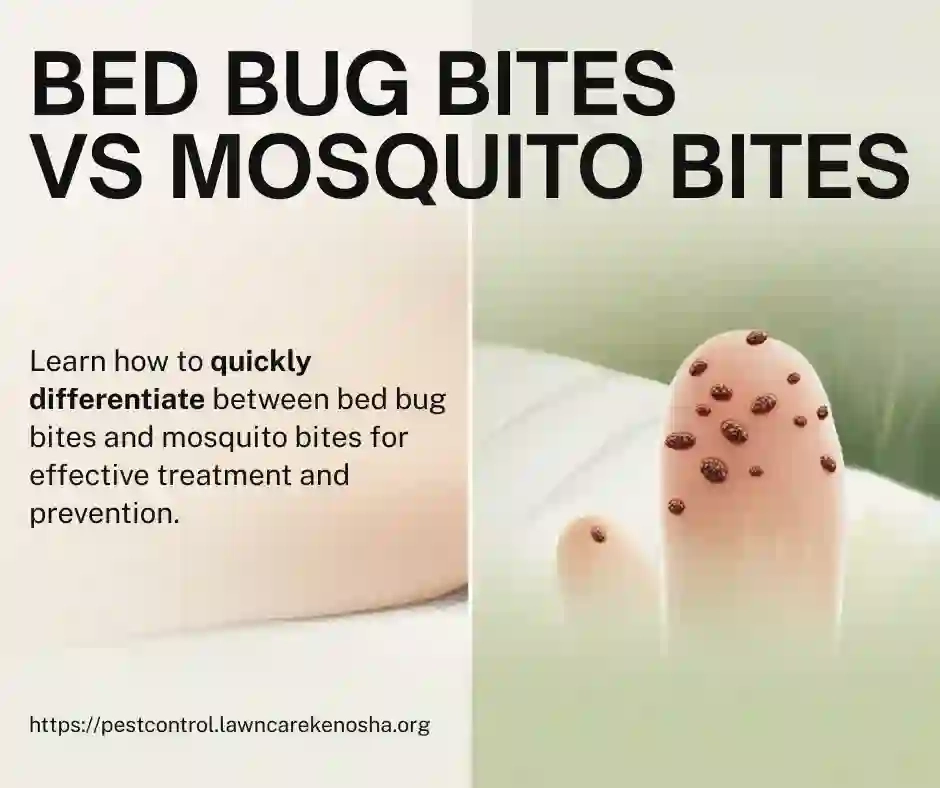
Mosquito bites — what sets them apart
In Wisconsin, mosquito season runs from late May through September, with peak activity in July and August — especially after rain. Mosquito bites have a distinct profile that differs sharply from bed bugs:
- Pattern: Random — no clustering or linear arrangement
- Location on body: Any exposed skin, including legs, ankles, and face — wherever you were outdoors or near a window
- Timing: Bites acquired outdoors or near open windows, particularly at dusk and dawn
- Appearance: Raised, puffy wheal (bump) with a central puncture point that flattens over 24–48 hours
- Itch onset: Immediate — the wheal and itch develop within minutes of the bite
- Recurrence: Related to outdoor exposure or open windows, not to sleeping in a specific location
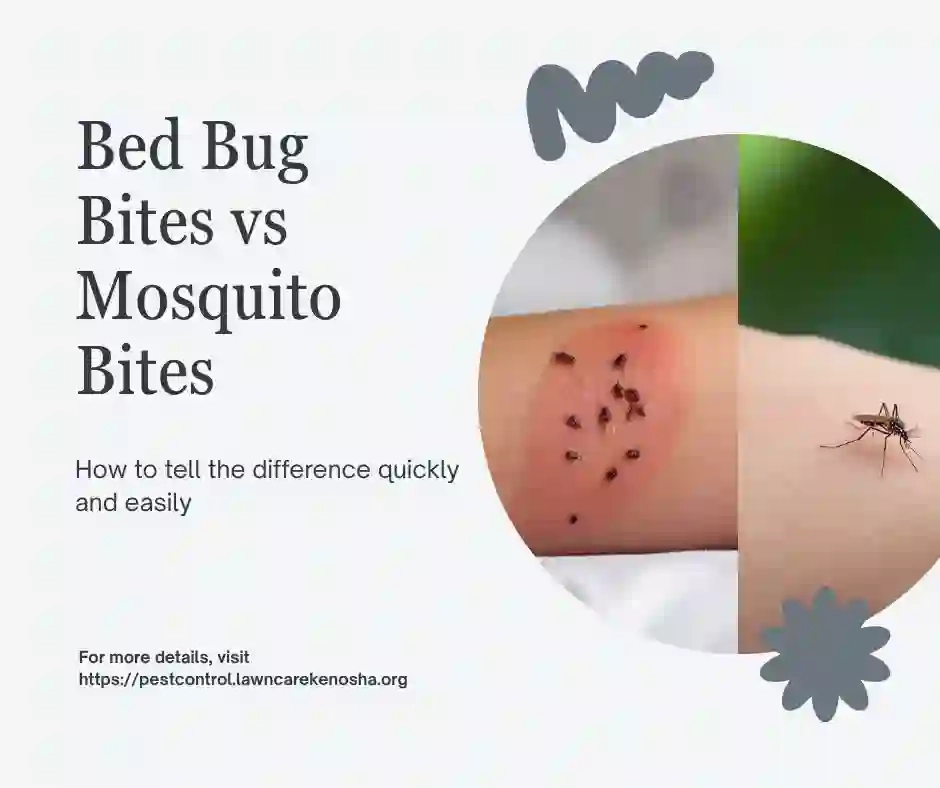
Side-by-side comparison
| Feature | Bed Bug Bites | Mosquito Bites |
|---|---|---|
| Pattern | Lines or clusters of 3–5 | Random, scattered |
| Itch onset | Delayed (hours later) | Immediate (within minutes) |
| Where on body | Exposed skin during sleep | Any exposed skin, outdoors |
| Time of occurrence | Overnight, in bed | Dusk/dawn, outdoors or near windows |
| Recurs in same location | Yes — same bed, same room | No — tied to outdoor exposure |
| Wheal reaction | Flat or slightly raised | Puffy raised wheal, subsides in 48 hrs |
| Multiple people affected | Anyone sleeping in that room | Anyone who was outdoors |
How to confirm bed bugs — physical evidence check
Bites alone cannot confirm bed bugs — the only reliable confirmation is finding physical evidence of the bug. Do this check immediately if bites are recurring in your bedroom:
- Mattress seams and corners: Pull back the mattress seam with a credit card. Look for small, apple-seed-sized brown insects, pale white nymphs, or shed exoskeletons
- Box spring: Check the underside fabric and wooden frame joints
- Headboard and bed frame: Particularly joints, screw holes, and cracks in wood
- Blood spots: Tiny rust-colored smears on sheets or pillowcases from crushed bugs or post-feed excretion
- Dark fecal spots: Small dark specks (digested blood) along mattress seams or baseboards near the bed
- Sweet musty odor: A heavy infestation produces a distinctive, sweet, musty smell in the bedroom

Treating mosquito bites
Mosquito bites are self-resolving. Reduce itch and swelling with over-the-counter hydrocortisone cream, oral antihistamines (cetirizine, diphenhydramine), or a cold compress. Avoid scratching — broken skin risks secondary bacterial infection. In Wisconsin, mosquitoes can carry West Nile virus, though human cases remain relatively rare. See a physician if a bite site develops significant swelling, warmth, or streaking, or if you develop fever or flu-like symptoms after bites.
For mosquito prevention in your Wisconsin yard, see our mosquito control home guide and our professional mosquito control service.
What to do if you suspect bed bugs
Do not immediately wash all bedding, bag clothing, or move furniture to other rooms — movement spreads bed bugs to previously unaffected areas. Do not spray over-the-counter aerosols in the bedroom — bed bugs have developed widespread resistance to pyrethroids, and repellent effects scatter bugs deeper into walls. The correct first step is to contain and call.
Encase the mattress and box spring in bed-bug-proof covers to trap any bugs present, avoid moving items out of the room, and call a professional for a proper inspection. Wisconsin winters do not kill bed bugs — they are cold-tolerant and survive year-round in heated structures.
Bed Bug Bites vs. Mosquito Bites FAQs
Can I have bed bugs if I only see a few bites?
Yes. Early-stage infestations produce fewer bites. Additionally, about 30% of people show no visible skin reaction to bed bug bites at all, which is why physical inspection of the mattress and bed frame is more reliable than bite appearance alone. A small number of bites appearing consistently in the bedroom overnight is reason enough to inspect for physical evidence.
Do bed bugs bite every night?
Not necessarily. Bed bugs feed every 3–10 days depending on temperature and host availability. A low-density infestation may produce bites sporadically rather than nightly, which can make it easy to dismiss early activity as random bug bites from outdoors. The key indicator is the consistent location — the same sleeping area — rather than frequency.
Can bed bugs live in Wisconsin winters?
Yes. Bed bugs are not outdoor insects and are not affected by Wisconsin's cold winters. They live inside heated structures year-round. The only cold-kill threshold for bed bugs is sustained exposure to temperatures below 0°F for four or more days — conditions not found inside a heated home. Bed bug infestations in Wisconsin are equally likely in January as in July.
Should I throw away my mattress if I have bed bugs?
Not necessarily, and often counterproductive. Disposing of an infested mattress moves bed bugs to other areas of the home during transport. It also does not eliminate the infestation — bed bugs live in bed frames, headboards, baseboards, outlets, and furniture, not just the mattress. A properly applied professional treatment is more effective than mattress disposal and less disruptive to the infestation.