Ants Guide
Ant Infestation Signs Wisconsin Homeowners Should Not Ignore
Seeing a few ants near your kitchen sink is not the problem. A colony of thousands feeding inside your walls is. Here is how to tell the difference — and when it is time to call a professional.
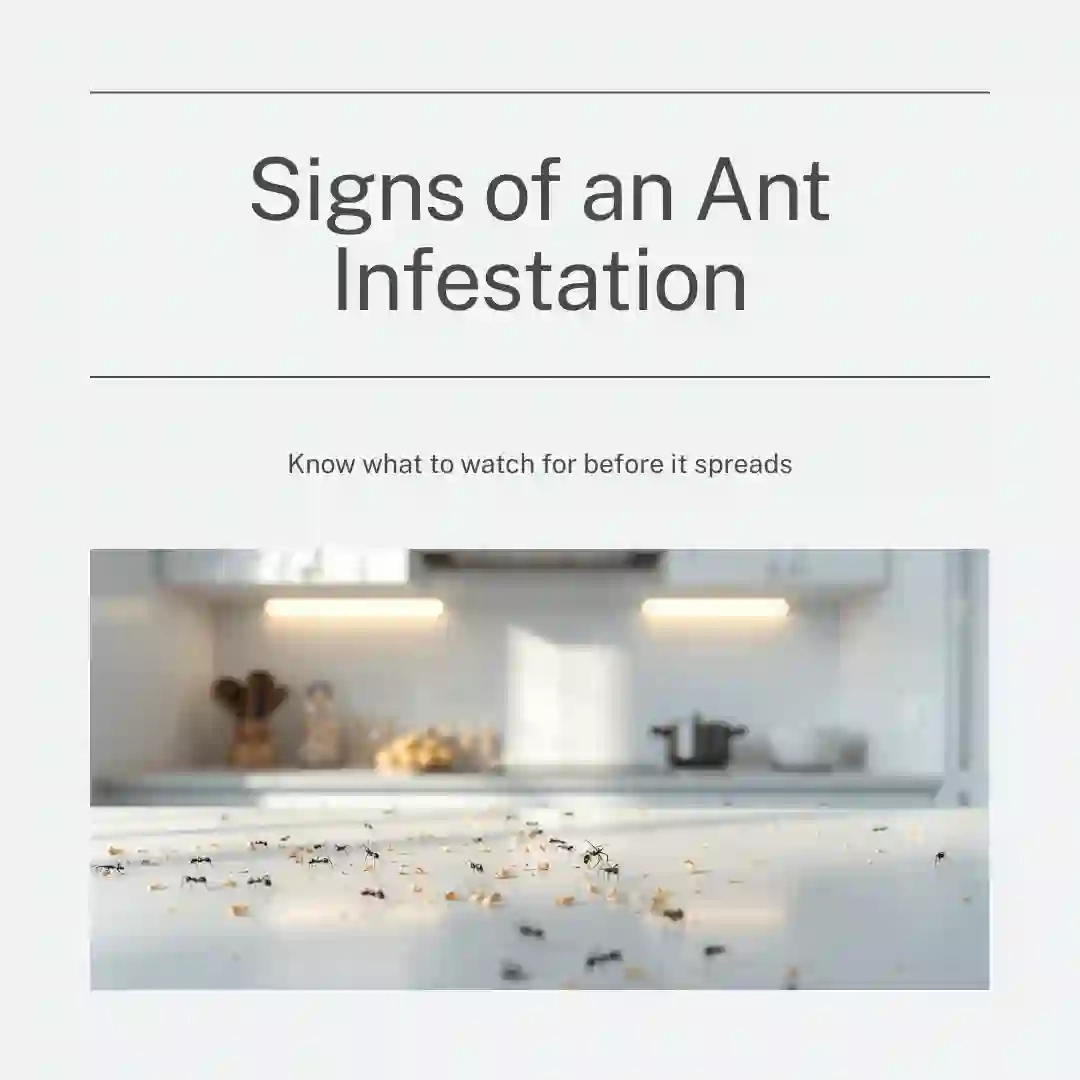
The three ant species Wisconsin homeowners see most
Not all ants are the same threat. Before you treat, knowing the species changes everything about the correct next step.
Carpenter ants — the structural concern
Wisconsin's most destructive ant species. Carpenter ants (Camponotus pennsylvanicus) are large, black, and do not eat wood — they excavate it to build galleries. A mature colony can contain several thousand workers and multiple satellite colonies spread across a structure. Signs include large black ants (⅜–½ inch) trailing after dark, piles of coarse, sawdust-like frass near windowsills or door frames, and a faint rustling sound inside walls at night. Carpenter ants are most active in Wisconsin from April through September, with winged swarmers appearing in May and June.
Pavement ants — the kitchen invader
Small, dark brown ants (⅛ inch) that nest under slabs, sidewalks, and foundations. They enter homes through cracks in concrete and foundation gaps seeking sweets and proteins. Pavement ant activity typically peaks in late spring when colonies are foraging to build population. Trails of small ants along baseboards or inside kitchen cabinets are the most common sign.
Odorous house ants — the persistent trail ant
Named for the rotten-coconut smell they produce when crushed. These small brown ants (⅛ inch) form large colonies with multiple queens, which is why over-the-counter sprays rarely eliminate them — killing workers does not address the queens. They are drawn to sweets and moisture and commonly appear near kitchen sinks, dishwashers, and leaking pipes.
Warning signs of a serious ant infestation
- Daily indoor trails — ants entering through consistent routes rather than random wandering
- Activity year-round or in winter — ants visible inside during cold months means a colony is nesting within the structure's heated envelope, not just foraging from outside
- Frass or debris piles — coarse sawdust-like material near wood trim, window frames, or sills indicates carpenter ant excavation
- Winged ants indoors in spring — swarmers emerging inside a home mean the parent colony is already inside the structure
- Multiple nest sites — carpenter ant satellite colonies in window frames, door headers, or wall voids adjacent to moisture
- Failed DIY products — repeated spray treatments that suppress activity briefly but do not eliminate it typically mean the colony is protected inside a void
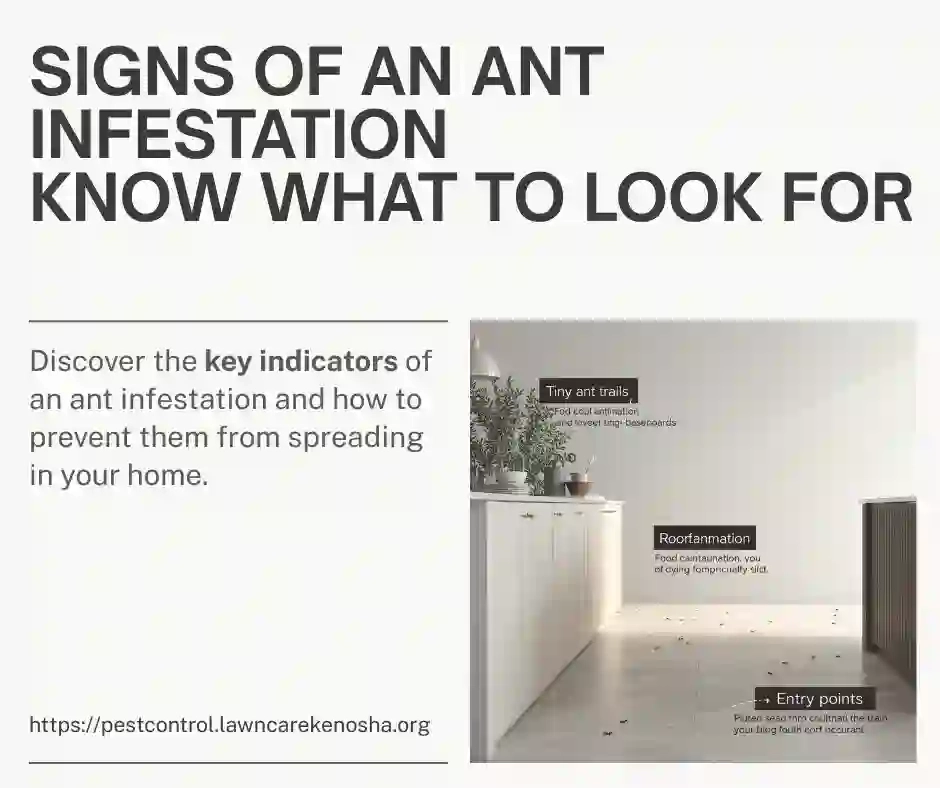
Why spraying makes carpenter ant problems worse
Contact sprays and over-the-counter aerosols kill foraging ants on contact but do not reach the colony. Worse, they can trigger a behavior called budding — in which a stressed colony splits into multiple satellite groups to protect the queens. One colony becomes three or four, each in a different wall void or structural cavity. This is especially common with odorous house ants and carpenter ants.
Correct treatment starts with identifying which species is present, where the colony (and any satellites) are located, what moisture or food source is sustaining the colony, and which entry points are being used. That is an inspection process — not a spray-first-ask-questions-later process.
Wisconsin-specific risk factors
Carpenter ants are especially prevalent in Wisconsin for several reasons: the state has abundant moisture from lakes, rivers, and humid summers; older housing stock with wood-framed construction dating to the early 1900s; and wooded suburban lots with decaying stumps or firewood piles adjacent to homes. Properties near water, with mature trees, or with a history of roof leaks or plumbing leaks are at elevated risk.
Prevention steps that actually work for Wisconsin ants
- Fix moisture problems immediately — leaking gutters, plumbing drips, and condensation near foundation sills are the #1 carpenter ant attractant
- Move firewood away from the house and store it elevated off the ground
- Remove tree stumps and decaying wood within 20 feet of the structure
- Trim tree limbs and shrubs away from rooflines and exterior walls — ants use these as bridges
- Seal gaps around pipes, utility penetrations, and where wood trim meets the foundation
- Store food in sealed containers and empty trash regularly
- Pick up pet food overnight
Related Wisconsin ant control services
Ant control is included in our perimeter pest control service, which creates a barrier around your foundation to stop ants and other crawling insects before they get inside. For active interior infestations, contact us for a targeted interior treatment plan. See our covered pests page for the full list of ant species and other insects we treat.
Ant Infestation FAQs
What do carpenter ants look like in Wisconsin?
Wisconsin carpenter ants are large (⅜–½ inch), solid black or black with a reddish-brown thorax. They are much larger than pavement ants or odorous house ants. Winged swarmers (reproductives) appear in May and June and are often mistaken for termite swarmers — the key difference is that ants have a pinched waist and bent antennae, while termites have a straight body and straight antennae.
Do carpenter ants cause structural damage?
Yes, over time. Carpenter ants do not eat wood but excavate smooth galleries for nesting. A large, mature colony of several thousand workers in wall voids, sill plates, or roof structures can cause significant damage over several years. Unlike termites, the damage is slower — but established colonies grow each year and are not self-limiting.
Why do I see more ants in spring in Wisconsin?
Spring warmth triggers foraging activity in existing colonies that have been dormant since fall. If you see ants inside your home in early spring, especially large black carpenter ants, there is a high probability the colony overwintered inside the structure — not outside. Colonies nesting outdoors in stumps or soil typically begin foraging in late April or May as temperatures rise above 50°F.
Can I treat ants myself with store-bought products?
For minor exterior ant trails, over-the-counter granular baits or gel baits applied carefully can reduce activity. However, for carpenter ant infestations nesting inside walls, DIY contact sprays rarely reach the colony and can cause budding. For any infestation that returns repeatedly, spreads to new areas, or involves large black carpenter ants indoors, professional treatment is the more reliable path.